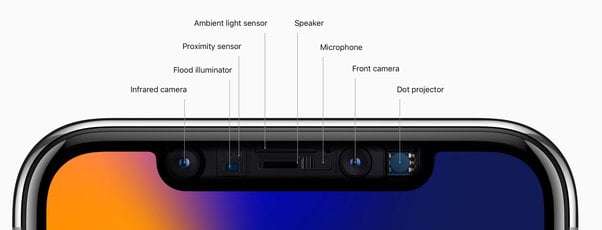
Apple’s Face ID is known for its speed, security, and ability to work in almost any lighting condition—even in complete darkness. One of the key components that makes this possible is the Flood Illuminator. This guide explains what the Flood Illuminator is, how it works, and what to do if it stops working.
What Is the Flood Illuminator in an iPhone?
The Flood Illuminator is an infrared (IR) light emitter located in the iPhone’s TrueDepth camera system at the top of the display. Its job is to project invisible infrared light onto your face so Face ID can recognize you accurately, regardless of ambient lighting.
Unlike a traditional flash, the Flood Illuminator:
- Emits infrared light, not visible light
- Works in both bright and dark environments
- Is safe for your eyes
How the Flood Illuminator Works with Face ID
Face ID relies on several components working together:
- Flood Illuminator
Emits infrared light to illuminate your face. - Dot Projector
Projects thousands of infrared dots onto your face to map its depth. - Infrared Camera
Reads the reflected IR light and dot pattern. - Neural Engine
Creates a mathematical model of your face and matches it securely.
✅ The Flood Illuminator ensures Face ID works even in total darkness by providing consistent IR lighting.
When Is the Flood Illuminator Used?
The Flood Illuminator activates when:
- You unlock your iPhone with Face ID
- You authenticate Apple Pay
- You sign in to apps using Face ID
- You use Face ID in low‑light or dark environments
You won’t see it turn on because infrared light is invisible to the human eye (though some cameras may detect it faintly).
Signs the Flood Illuminator May Not Be Working
If the Flood Illuminator fails, Face ID performance is affected.
Common symptoms include:
- Face ID only works in bright light
- “Face ID is not available” error messages
- Face ID setup failing
- Inconsistent or slow recognition
- Face ID stops working after a screen repair
Common Causes of Flood Illuminator Issues
1. Dirt or Obstructions
Dust, debris, or a screen protector can block the IR sensors.
✅ Clean the top of the screen with a soft microfiber cloth.
2. Damaged or Misaligned TrueDepth Components
Dropping the phone or improper screen replacement can affect alignment.
✅ This often requires professional repair.
3. Water or Liquid Damage
Moisture can damage sensitive IR components.
✅ Even minor exposure can affect Face ID hardware.
4. Software or iOS Issues
System bugs or corrupted settings may prevent proper operation.
✅ Updating or resetting Face ID may help.
How to Troubleshoot Flood Illuminator Problems
Step 1: Clean the Face ID Area
- Remove cases or screen protectors
- Wipe the notch or Dynamic Island area gently
Step 2: Restart Your iPhone
A simple restart can resolve temporary software glitches.
Step 3: Check Face ID Settings
- Go to Settings → Face ID & Passcode
- Ensure Face ID is enabled
- Tap Reset Face ID and set it up again
Step 4: Update iOS
- Go to Settings → General → Software Update
- Install any available updates
Step 5: Reset All Settings
This doesn’t erase data but resets system preferences:
- Settings → General → Transfer or Reset iPhone → Reset → Reset All Settings
Can You Fix a Flood Illuminator Yourself?
❌ No.
The Flood Illuminator is a secure, paired hardware component. DIY repairs or third‑party screen replacements often:
- Permanently disable Face ID
- Break sensor calibration
- Trigger Face ID errors
✅ Always use Apple or Apple Authorized Service Providers for repairs.
How to Check the Flood Illuminator (Advanced)
Some technicians use infrared‑sensitive cameras to detect IR output, but this is not recommended for consumers and doesn’t guarantee a full diagnosis.
When to Contact Apple Support
Contact Apple Support if:
- Face ID stopped working after a repair
- Errors persist after resetting Face ID
- Your iPhone was exposed to liquid
- Face ID fails during setup
Final Thoughts
The Flood Illuminator is a critical part of the iPhone’s Face ID system, enabling secure facial recognition in any lighting condition—even total darkness. When it works correctly, you never notice it. When it fails, Face ID becomes unreliable or unusable. Basic troubleshooting can resolve software‑related issues, but hardware problems almost always require professional repair. Understanding the Flood Illuminator helps you know when a simple fix will do—and when expert help is needed.
iPhone Flood Illuminator
| Feature | Description |
|---|---|
| Function | Illuminates the user’s face with infrared light to aid Face ID in low-light conditions. |
| Technology | Infrared LED |
| Components | Small infrared LED and diffuser |
| Location | Next to the TrueDepth camera system near the top of the iPhone X |
| Impact on Face ID | Crucial for accurate Face ID recognition in low light. Not required for Face ID to function in well-lit environments. |
| Additional notes | Not visible to the naked eye. Not present in iPhone models after the X and XS. Face ID in later models uses improved ambient light sensors and software adjustments for low-light performance. |
Understanding the Flood Illuminator: A Key to iPhone’s Security
Have you ever wondered how your iPhone recognizes your face in a dimly lit room? This feat is largely thanks to a small but powerful component known as the flood illuminator. It’s a crucial part of the iPhone’s Face ID technology, ensuring that the facial recognition system works efficiently, regardless of the lighting conditions.
What is a Flood Illuminator?
The flood illuminator is an advanced feature integrated into the iPhone’s TrueDepth camera system, first introduced with the iPhone X. It emits infrared (IR) light onto the user’s face. This IR light is invisible to the naked eye but crucial for the iPhone to map and recognize facial features accurately. The technology is smart enough to work in various environments, whether you’re in bright sunlight or a dark room.
How Does It Work?
When you unlock your iPhone using Face ID, the flood illuminator first bathes your face in IR light. The light is uniform, ensuring even illumination across your face. This step is critical because it allows the subsequent components, like the dot projector and the infrared camera, to capture detailed facial data accurately. The dot projector creates a 3D map of your face using thousands of tiny dots, and the infrared camera reads this map. The flood illuminator ensures that this process is seamless, even in low light conditions.
Real-World Applications and User Experiences
Users often rave about the convenience and security of Face ID, and the flood illuminator is a key player in this experience. It allows for quick and accurate face recognition, making tasks like unlocking your phone, making payments, or accessing secure apps hassle-free.
Repair and Maintenance
While the flood illuminator is a robust component, it can sometimes face issues, especially if the iPhone is damaged. Repairing the flood illuminator requires professional expertise, as it’s an integral part of the sophisticated Face ID system. If you’re facing issues with Face ID, it’s recommended to consult an authorized service provider.
Conclusion
The flood illuminator in iPhones represents a blend of advanced technology and practical application, enhancing both the security and ease of use of Apple’s devices. It’s a testament to how seemingly minor components can have a significant impact on our daily tech interactions.