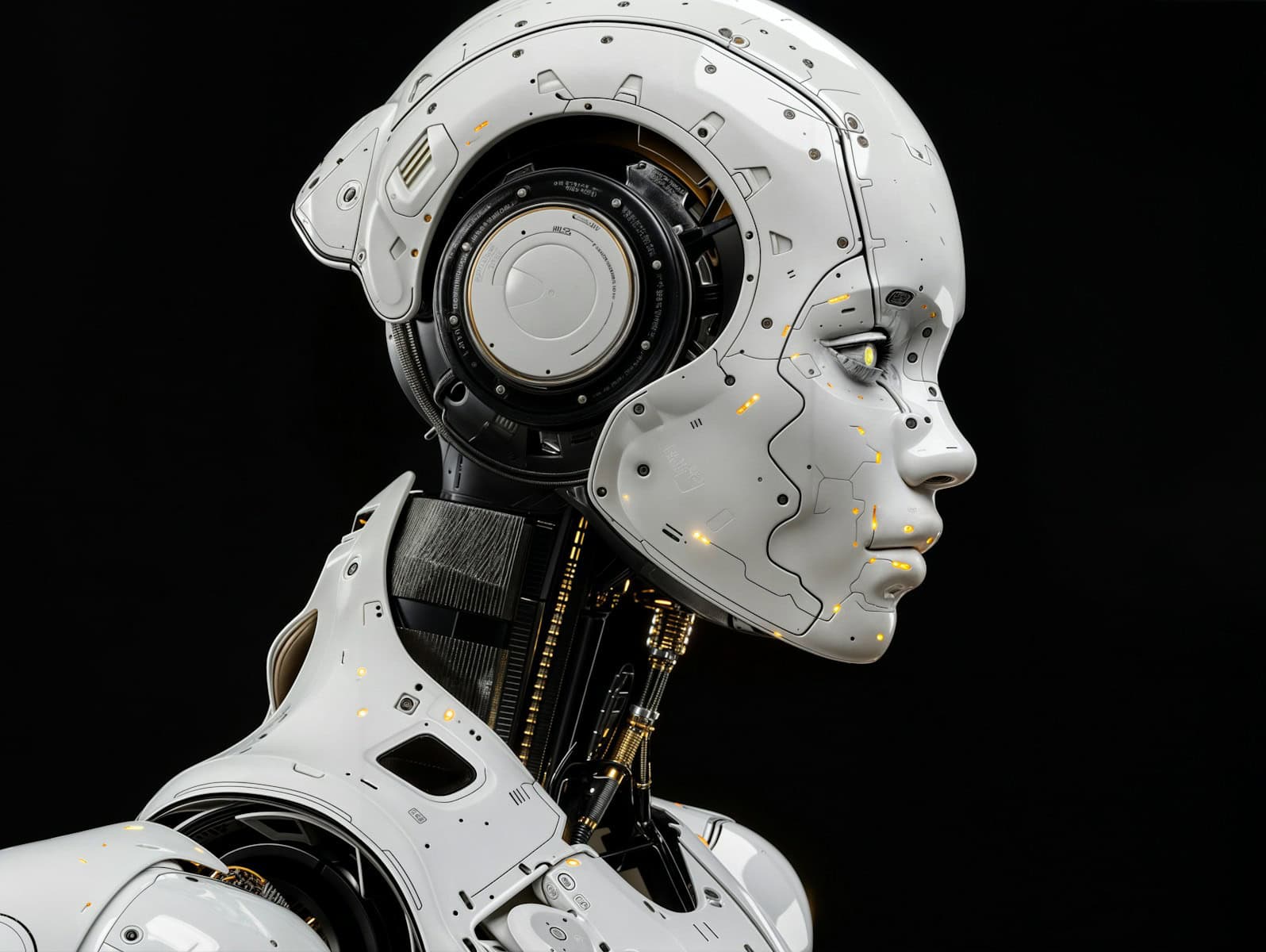
Humanoid robots have captivated human imagination for centuries, evolving from mythical concepts and mechanical curiosities into sophisticated machines that promise to reshape industries and society. As we stand in 2025, these human-like automatons are no longer confined to science fiction—they represent a rapidly advancing field poised to drive significant economic and social development.
From Ancient Dreams to Modern Reality
The journey of humanoid robots began long before the digital age. Renaissance-era mechanical automata laid the groundwork for what would eventually become modern robotics. These early creations, while primitive by today’s standards, demonstrated humanity’s enduring fascination with recreating ourselves in mechanical form (source: Simply Robotics).
The 20th century marked a pivotal turning point, as advances in electronics, computing, and materials science transformed humanoid robots from clockwork curiosities into programmable machines capable of performing complex tasks.
Current State of Humanoid Robotics
Today’s humanoid robots represent a remarkable convergence of multiple technological disciplines. According to recent comprehensive research, modern humanoid robots incorporate three essential system components that define their capabilities (source: IEEE):
1. Ontology Structure
The physical design and mechanical framework that enables human-like movement and interaction with environments designed for people.
2. Control and Decision-Making
Advanced algorithms and AI systems that allow robots to process information, plan actions, and execute complex behaviors autonomously.
3. Perception and Interaction
Sophisticated sensor arrays and processing capabilities that enable robots to understand their surroundings and interact naturally with humans and objects.
These components work in concert to create machines that can navigate human spaces, manipulate objects designed for human hands, and potentially collaborate with people in meaningful ways.
Key Technological Innovations
Recent years have witnessed several breakthrough innovations that have accelerated humanoid robot development:
Advanced Locomotion: Modern humanoid robots employ optimization-based locomotion planning that allows for stable walking, running, and even navigating challenging terrain. These systems continuously estimate environmental conditions and adjust movement patterns in real-time.
Artificial Intelligence Integration: Machine learning and neural networks have dramatically improved robots’ ability to recognize objects, understand speech, process natural language, and make autonomous decisions in unpredictable environments.
Materials Science: Lighter, stronger materials combined with more efficient actuators have made humanoid robots more agile and energy-efficient while reducing manufacturing costs.
Human-Robot Interaction: Natural language processing, emotion recognition, and adaptive behavior algorithms enable more intuitive and meaningful interactions between humans and robots.
Real-World Applications Across Industries
Humanoid robots are increasingly recognized for their potential across multiple sectors (source: Wiley):
Healthcare: Assisting with patient care, rehabilitation therapy, and eldercare support in aging populations.
Manufacturing: Performing repetitive or dangerous tasks in environments designed for human workers without requiring facility redesigns.
Service Industries: Working in hospitality, retail, and customer service roles where human-like interaction is valued.
Education: Serving as teaching assistants and providing personalized learning experiences for students.
Disaster Response: Operating in hazardous environments where human presence would be dangerous or impossible.
Significant Challenges Ahead
Despite remarkable progress, humanoid robots face substantial obstacles that must be overcome for widespread adoption (source: Atlantis Press):
Technical Limitations
Computational Capacity: Processing the vast amounts of sensory data required for real-time decision-making remains computationally intensive and energy-demanding.
Material Constraints: Creating artificial muscles, skin, and joints that match human flexibility, durability, and sensitivity continues to challenge engineers.
Power Supply: Battery technology has not kept pace with the energy demands of sophisticated humanoid systems, limiting operational duration.
Dexterity: Replicating the fine motor control and tactile sensitivity of human hands remains an engineering challenge.
Ethical Considerations
The rise of humanoid robots raises profound ethical questions that society must address:
- Employment Displacement: How will widespread adoption affect human workers, and what safety nets need to be established?
- Privacy Concerns: Robots equipped with sensors and cameras raise questions about surveillance and data security.
- Emotional Attachment: Human-like robots may foster inappropriate emotional dependencies, particularly among vulnerable populations.
- Responsibility and Liability: When autonomous robots make mistakes, who bears responsibility—manufacturers, owners, or the machines themselves?
Economic Barriers
High development and manufacturing costs currently limit humanoid robots to well-funded research institutions and large corporations. Broader democratization requires significant cost reductions.
Future Research Directions
The field continues to evolve rapidly, with several promising research directions emerging (source: Springer):
Soft Robotics: Incorporating compliant materials that can safely interact with humans and adapt to various objects and surfaces.
Swarm Intelligence: Enabling multiple humanoid robots to collaborate and share learning experiences.
Brain-Computer Interfaces: Exploring direct neural control of humanoid robots for applications in prosthetics and telepresence.
Emotional Intelligence: Developing more sophisticated models of human emotion to enable empathetic and contextually appropriate responses.
Energy Efficiency: Creating more efficient actuators, smarter power management systems, and potentially bio-inspired energy solutions.
The Path Forward
As we look toward the future, the trajectory of humanoid robotics appears both promising and complex. These machines represent a fascinating blend of technological innovation and human aspiration—our attempt to create beings in our own image that can extend our capabilities and address challenges beyond human limitations.
The key to realizing the full potential of humanoid robots lies in balancing their benefits with the ethical and practical challenges they present. Success requires ongoing dialogue between engineers, ethicists, policymakers, and the public to ensure that humanoid robots enhance rather than diminish human flourishing.
The evolution of humanoid robots is far from complete. Each advancement brings us closer to machines that can seamlessly integrate into human society, but also raises new questions about what it means to be human in an age of increasingly human-like machines. The answers we develop today will shape not just the robots of tomorrow, but the very fabric of our shared future.
As computational power increases, materials science advances, and AI systems grow more sophisticated, the line between science fiction and reality continues to blur. The humanoid robots of 2025 are just the beginning—the true revolution may well lie in what comes next.