The AMD Radeon RX 7900 XTX launched as AMD’s flagship RDNA 3 graphics card, built for high-end 4K gaming. But now that it’s 2026, with newer GPUs on the market, many gamers are asking:
Is the 7900 XTX still worth buying?
Let’s break it down.
Quick Overview: RX 7900 XTX Specs
- Architecture: RDNA 3
- VRAM: 24GB GDDR6
- Memory Bus: 384-bit
- Ray Tracing: 2nd-gen AMD RT cores
- Power Draw: ~355W
- Target Resolution: 1440p Ultra / 4K
Even in 2026, 24GB of VRAM is a major advantage.
✅ Why the 7900 XTX Is Still Worth It in 2026
1️⃣ 24GB VRAM Is Aging Very Well
Modern games in 2026 are increasingly VRAM-hungry — especially at 4K with high-resolution textures.
Many newer midrange cards ship with:
- 12GB
- 16GB
The 7900 XTX’s 24GB VRAM provides excellent future-proofing for:
- 4K gaming
- Modded games
- AI workloads
- Content creation
- Unreal Engine 5 titles
This alone keeps it relevant.
2️⃣ Strong 4K Raster Performance
In pure rasterization (traditional rendering), the 7900 XTX still performs extremely well.
It can:
- Handle 4K High/Ultra in most modern titles
- Deliver high FPS at 1440p competitive settings
- Compete closely with high-end cards from its generation
If you prioritize raw FPS over ray tracing, it remains a powerful option.
3️⃣ Better Value on the Used Market
By 2026, prices have dropped significantly compared to launch.
If you can find a 7900 XTX at:
- A strong discount
- In good condition
- From a reputable seller
It may offer excellent price-to-performance value.
❌ Reasons It May Not Be Worth It
1️⃣ Ray Tracing Still Trails NVIDIA
While AMD improved ray tracing with RDNA 3, it still doesn’t match NVIDIA’s high-end offerings in heavy RT workloads.
If you:
- Play ray tracing-heavy titles
- Care about maxed RT settings
- Want the strongest path tracing performance
You may prefer newer-generation alternatives.
2️⃣ Power Consumption
At ~355W, the 7900 XTX is not a low-power card.
You’ll need:
- A quality PSU (850W recommended)
- Strong airflow
- A case that fits large GPUs
Newer GPUs in 2026 may offer better performance per watt.
3️⃣ No Newest Generation Features
By 2026, newer GPUs likely support:
- Improved AI upscaling
- Enhanced frame generation
- Better ray tracing acceleration
- Updated display standards
The 7900 XTX still supports FSR, but may lack the newest refinements found in next-gen GPUs.
Who Should Buy the 7900 XTX in 2026?
✅ 4K gamers who prioritize raster performance
✅ Players who don’t heavily use ray tracing
✅ Creators needing 24GB VRAM
✅ Buyers finding it at a discounted price
✅ Linux gamers (AMD drivers are often strong on Linux)
Who Should Skip It?
❌ Gamers who want the best ray tracing possible
❌ Those building ultra-efficient systems
❌ Buyers paying near-original launch pricing
❌ Users wanting the absolute latest GPU tech
Performance in 2026 Games
In most modern AAA games:
- 1440p Ultra → Excellent
- 4K High → Very strong
- 4K Ultra + Heavy Ray Tracing → More demanding
With FSR enabled, performance remains competitive.
7900 XTX vs. Newer GPUs (General Comparison)
| Category | RX 7900 XTX (2026) |
|---|---|
| Raster Performance | Still strong |
| Ray Tracing | Good, but not best |
| VRAM | Excellent (24GB) |
| Power Efficiency | Average by 2026 standards |
| Value (discounted) | Very good |
| Future-Proofing | Solid due to VRAM |
Final Verdict: Is It Worth It?
Yes — but only at the right price.
In 2026, the RX 7900 XTX is still a powerful GPU, especially for 4K raster gaming and VRAM-heavy workloads. However, it’s no longer cutting-edge.
It’s worth it if:
- You find it significantly cheaper than newer flagship cards
- You value VRAM capacity
- You don’t prioritize maximum ray tracing
If priced too close to newer-generation GPUs, you’re better off going with the latest architecture.
Bottom Line
The RX 7900 XTX isn’t the newest kid on the block in 2026 — but it’s far from obsolete.
With 24GB of VRAM and strong 4K performance, it remains a high-end contender — especially for value-focused enthusiasts.
Radeon 7900 XTX: Evaluating Performance and Value
The Radeon RX 7900 XTX, AMD’s flagship graphics card, has made a splash in the GPU market with its impressive performance and competitive pricing. But is it the right choice for you? This article looks at the pros and cons of this powerful GPU, examining its performance, value, features, and potential drawbacks, helping you make an informed decision for your gaming or content creation needs.
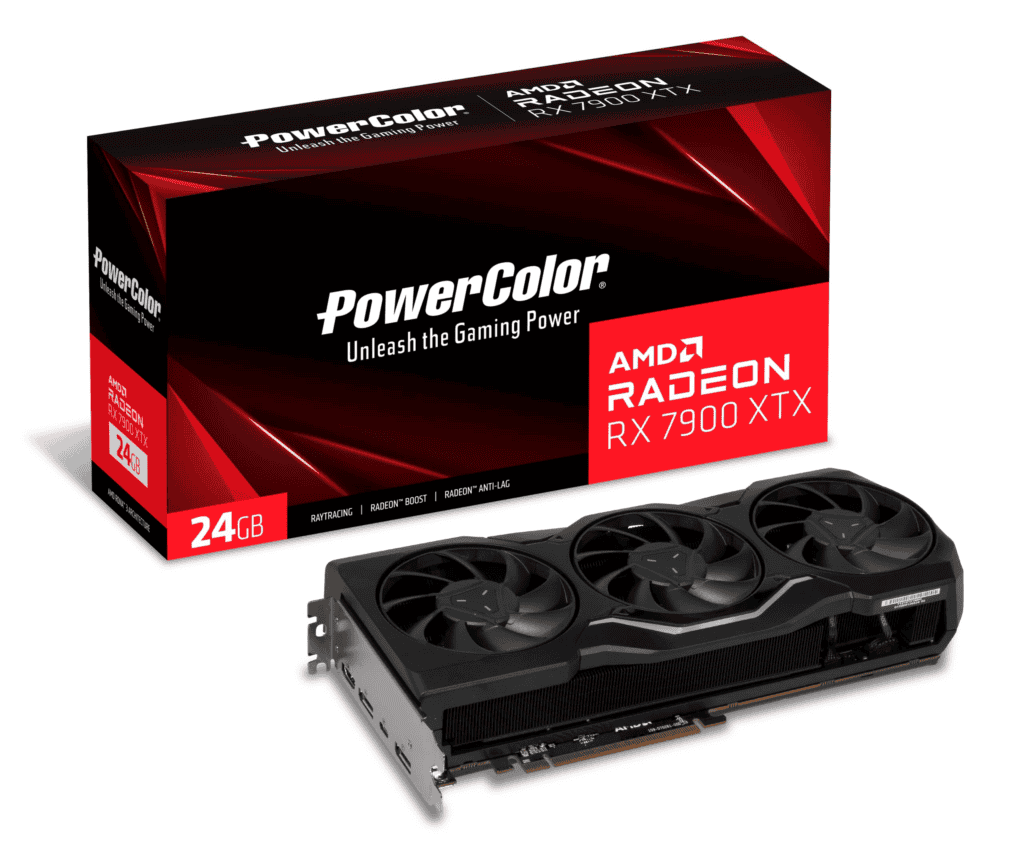
Radeon RX 7900 XTX: Assessing the Pros and Cons
Pricing
You can buy a Radeon RX 7900 XTX (New) in the range of $900 – $1200
Performance Prowess
The Radeon RX 7900 XTX is undeniably a powerhouse, consistently delivering impressive frame rates in most modern AAA games at 4K resolution. It rivals or surpasses the performance of Nvidia’s RTX 4080 in many scenarios, especially when ray tracing is not heavily involved.
Ray Tracing Considerations
When it comes to ray tracing, the 7900 XTX falls behind Nvidia’s offerings. While it can handle ray-traced games, it may not match the frame rates achieved by comparable Nvidia cards. However, AMD’s FSR (FidelityFX Super Resolution) technology can help boost performance in ray-traced games.
Value Proposition
One of the 7900 XTX’s strongest points is its price-to-performance ratio. It typically costs less than the RTX 4080 while offering similar or superior performance in rasterization tasks. This makes it an attractive option for gamers who prioritize value.
Cooling and Power Consumption
The reference design of the 7900 XTX has faced criticism for its cooling solution. Some users report high temperatures and noise levels under heavy load. However, aftermarket cards with custom cooling solutions often address these concerns. Power consumption is also relatively high compared to some Nvidia counterparts.
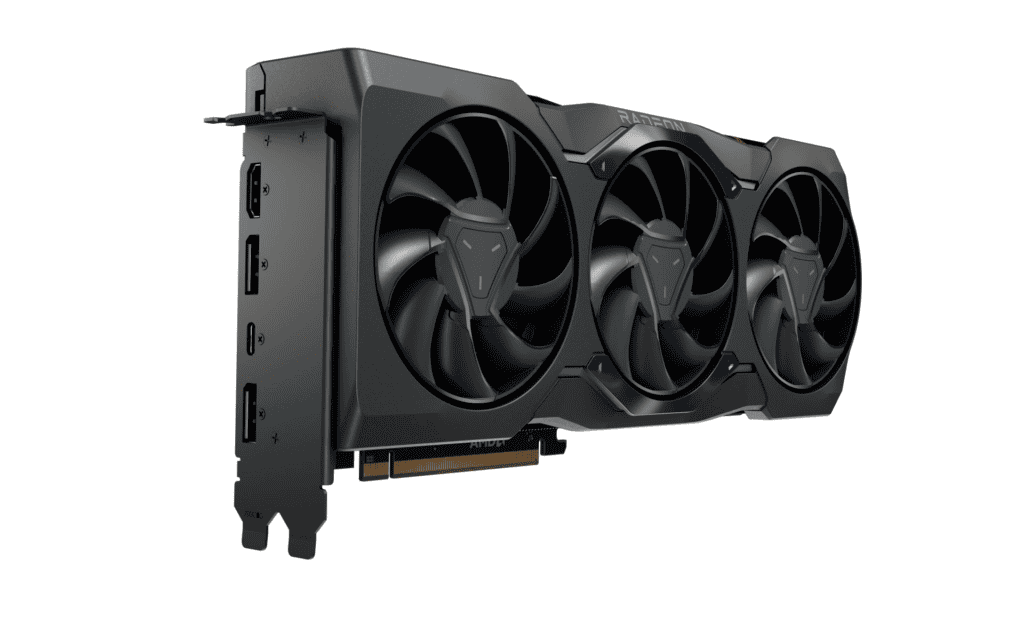
Feature Set
AMD’s latest generation of GPUs brings new features like DisplayPort 2.1 support and AV1 encoding, which can be appealing for content creators and future-proofing your system. However, the lack of DLSS (Deep Learning Super Sampling) equivalent might be a drawback for some gamers.
Pros and Cons Summary
| Pros | Cons |
|---|---|
| Excellent rasterization performance | Weaker ray tracing performance compared to Nvidia |
| Competitive price-to-performance ratio | Reference cooler can run hot and loud |
| DisplayPort 2.1 and AV1 encoding support | Lacks a DLSS equivalent |
| Large 24GB VRAM | High power consumption |
Overall
The AMD Radeon RX 7900 XTX is a great GPU for gamers who want to enjoy gaming at 4K resolution. It performs on par with the competition, with only the RTX 4090 outdoing it in terms of gaming performance. But you’re likely to find a Radeon RX 7900 XTX for a lot cheaper than a 4090, so from that standpoint, it’s a good value choice for high-end gamers and content creators.
If you need top-tier performance and don’t want to spring for the NVIDIA 4090, this card is a no brainer. It’s excellent for 4K gaming and has enough VRAM for demanding workloads. While it doesn’t perform as well as Nvidia in ray tracing, AMD’s FSR can help with that. Keep in mind that the reference cooler has limitations and the card’s power consumption is something to consider. If noise and heat are concerns for you, consider a model with custom cooling. Whether the Radeon RX 7900 XTX is “worth it” or not depends on your specific needs and priorities. If you care about performance, value, and future-proofing, and are open to considering aftermarket cooling options, the 7900 XTX is a strong contender in the high-end GPU market.
Radeon RX 7900 XTX Overview
The Radeon RX 7900 XTX marks a significant advancement for AMD’s graphics cards, introducing novel technologies and a strong emphasis on high performance.
Core Technology and Architecture
AMD’s Radeon RX 7900 XTX leverages the new RDNA 3 architecture, a significant shift from the previous RDNA 2 design. The RDNA 3 architecture empowers the GPU with a chiplet design, combining several smaller chips to work together, diverging from the traditional monolithic approach. This GPU boasts a groundbreaking chiplet technology that integrates a Graphics Compute Die (GCD) with multiple Memory Cache Dies (MCDs). This bold move aims to enhance power efficiency and performance.
Key features of RDNA 3 include:
- Compute Units (CUs): Enhanced for optimal efficiency and performance.
- Ray Tracing Accelerators: Integrated into each Compute Unit for improved real-time ray tracing capabilities.
- AI Accelerators: New additions that assist in machine learning tasks to improve gaming and creative workloads.
- Infinity Cache: A large, high-speed cache that reduces memory latency issues and bandwidth demands.
Specifications and Performance
The specs sheet of the RX 7900 XTX is impressive, highlighting its capabilities as a top-tier graphics card. It has a robust configuration that includes:
- Stream Processors: 6144
- Ray Accelerators: Present in all 96 CUs
- Base Clock: TBD
- Boost Clock: Up to 2.5 GHz
- Memory: 24 GB of GDDR6
- Memory Bandwidth: 960 GB/s
- Infinity Cache: 96 MB
In terms of performance, the RX 7900 XTX aims at both excellent efficiency and high-fidelity gaming. Gamers can expect it to handle the latest games at 4K resolution with ease. Comparisons with competitor GPUs like Nvidia’s Ada Lovelace-based cards suggest that the Radeon RX 7900 XTX holds its ground, offering competitive frame rates and enhanced features like the Radiance Display Engine for high-resolution outputs.
Specific performance highlights include:
- Raw Performance: Among the most potent GPUs in AMD’s lineup.
- Efficiency: Notable improvements thanks to the RDNA 3 architecture.
- Ray Tracing: Solid capabilities, though actual performance varies by game and settings.
Despite the introduction of chiplets, it remains to be seen how this new approach directly translates to real-world performance against traditional designs. Yet, the Radeon RX 7900 XTX promises a compelling option for high-end gaming rigs.
Performance Comparisons and Benchmarks
When assessing the value of the Radeon RX 7900 XTX, one must consider its performance against competition and in various gaming scenarios. This section zeroes in on these comparisons, highlighting where the RX 7900 XTX stands in the high-end GPU landscape.
Against Nvidia Alternatives
The Radeon RX 7900 XTX goes head-to-head with Nvidia’s RTX 4080 on several fronts. While being less expensive, the RX 7900 XTX offers competitive gaming performance. It supports a GDDR6 memory, which, while not as fast as Nvidia’s GDDR6X, still provides a broad bandwidth for handling games at high resolutions. The total board power of the Radeon is less than the RTX 4080, which might translate into lower power consumption.
- Price Point: At its MSRP, the 7900 XTX is notably priced lower than the Nvidia RTX 4080.
- Performance Metrics:
- Clock Speed: RX 7900 XTX often operates at high clock speeds, closely rivaling Nvidia’s offerings.
- Memory: 7900 XTX’s GDDR6 versus RTX 4080’s GDDR6X; less bandwidth but still substantial for performance needs.
Real-World Gaming and Resolutions
In terms of actual gaming experience, the RX 7900 XTX has shown its strength across various resolutions:
1080p: Dominant performance, often exceeding the needs of the resolution.
1440p: Consistently high frames per second, making it ideal for high refresh rate monitors.
4K: Competent in 4K gaming, although this is where comparisons with the RTX 4080 become more nuanced, as Nvidia’s card might edge ahead particularly in games that heavily utilize ray tracing.
Frame Rates:
- 1080p: Outstanding, well beyond 60fps in most titles.
- 1440p: Excellent, suitable for 144Hz displays.
- 4K: Good, but may trail behind Nvidia in certain scenarios.
Advanced features like ray tracing and AI acceleration, where Nvidia’s RTX 4080 and up leverage their proprietary technologies, are areas where the RX 7900 XTX competes with slightly less finesse. However, for pure rasterization performance, it punches above its weight, considering the price point.
Cost Analysis and Market Position
When considering whether the Radeon RX 7900 XTX is worth its price tag, it’s essential to look at both its market position against competitors and its pricing strategy.
Pricing and Availability
MSRP: The AMD Radeon RX 7900 XTX debuted with a manufacturer’s suggested retail price (MSRP) of $999, aiming to provide high-end performance at a competitive price point.
- Retail Pricing: It closely matches third-party retail pricing, barring exceptional models that may carry a premium.
- Availability: As of the current market, the RX 7900 XTX GPUs are generally available and are not as affected by the stock shortages that have plagued previous GPU launches.
Value Proposition and Longevity
Performance: Out of the gate, the RX 7900 XTX is one of the fastest GPUs from AMD’s lineup, suggesting a solid investment for gamers and professionals. It’s designed to handle demanding tasks like 4K gaming and content creation without a hitch.
- Efficiency: With its innovative chiplet design, the RX 7900 XTX achieves notable efficiency gains. This could mean reduced power costs over time.
- Longevity: The combination of 96 Compute Units, a total of 6,144 Streaming Processors, and high memory bandwidth offers the prospect of staying relevant for several years, as games and applications continue to evolve.
Zen 4 Compatibility: For those with AMD-based systems, especially those using Zen 4 CPUs, the RX 7900 XTX can be considered a compatible and synergistic component, potentially ensuring smoother overall performance.
By keeping a close eye on its price, performance, and longevity, the Radeon RX 7900 XTX holds a stable position in the GPU market, providing both gamers and creators with a valuable option.
Frequently Asked Questions
When considering the Radeon RX 7900 XTX, common questions asked pertain to its performance, especially how it stacks up against competitors, its capabilities in high-resolution gaming, and differences from its sibling, the 7900 XT.
How does the 7900 XTX compare to the 4080 in terms of performance?
The Radeon RX 7900 XTX generally offers performance on par with or slightly better than the RTX 4080. Benchmarks have shown it can compete vigorously at various resolutions, making it a solid competitor in its price range.
Can the 7900 XTX run games smoothly at 4K resolution?
Yes, the 7900 XTX is fully capable of handling games at 4K with smooth framerates. It’s designed for high-resolution gaming and can deliver exceptional gaming experiences at 4K settings.
What are the main differences between the 7900 XT and the 7900 XTX?
The key differences lie in performance and power draw. The 7900 XTX outperforms the 7900 XT, offering about 12.4% higher framerates at 4K. However, the 7900 XT is more economical, costs less, and consumes less power.
How does the Sapphire 7900 XTX variant stand out from other models?
Sapphire’s variant of the 7900 XTX often features enhanced cooling solutions and custom PCB designs, which may lead to better overclocking potential and performance compared to baseline models.
What class of GPU is the 7900 XTX considered equivalent to in the current market?
In today’s market, the 7900 XTX is considered a top-tier GPU, equivalent to high-end models in terms of performance, such as the Nvidia RTX 4080.
Is a 7900 XTX card considered too powerful for gaming at 1440p resolution?
While the 7900 XTX excels at 4K, it’s not considered too powerful for 1440p gaming. Users opting for this resolution will experience very high framerates and may benefit from the GPU’s power in maximizing graphics settings and future-proofing their system.